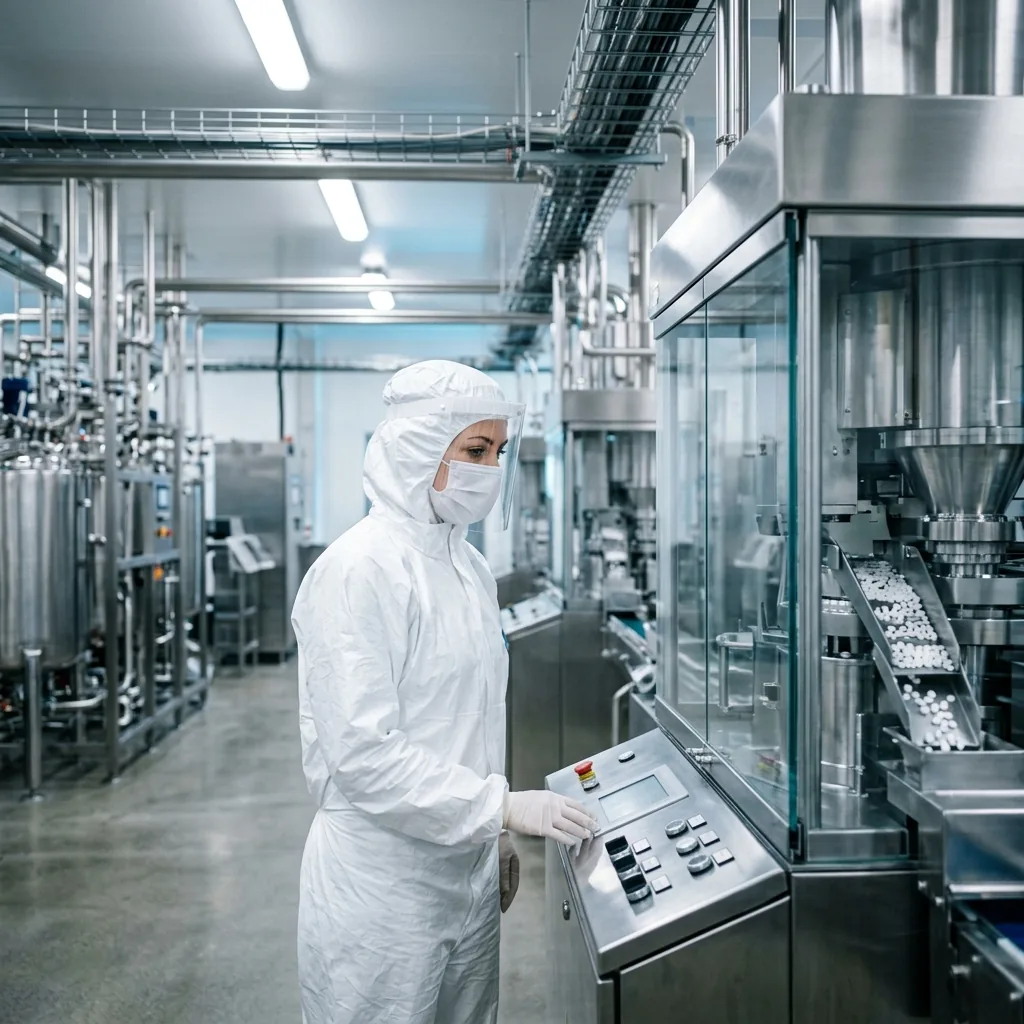

For years, the application of Artificial Intelligence (AI) in the pharmaceutical industry was relegated to isolated pilot projects and exploratory research groups. However, 2026 marks a structural shift: AI has graduated from experimental sandboxes to become the **default operating system** driving the global biopharmaceutical value chain.
From predictive molecular design to live optimization of clinical trial enrollment and automated cleanroom management, the implementation of unified AI architectures is dramatically shortening drug development timelines.
AI-First Drug Discovery
Modern drug discovery now relies heavily on predictive algorithms and deep learning models that evaluate millions of molecular interactions in seconds. By predicting binding affinity, toxicity profiles, and bioavailability before a compound ever enters a physical laboratory, developers are cutting lead-optimization phases from years to months.
Optimizing Clinical Validation and Patient Matching
Clinical trials represent one of the most expensive and time-consuming phases of drug development. AI is transforming this domain by analyzing electronic health records (EHRs) and genetic databases to match ideal patient cohorts to active clinical trials. This has halved patient recruitment times and minimized high trial drop-out rates.
Predictive Manufacturing and QA/QC Integration
In manufacturing, AI-driven digital twins monitor cleanroom HVAC pressure differentials, fill-finish line particle rates, and continuous blending systems. Real-time predictive analytics allow quality control teams to identify manufacturing deviations instantly, ensuring compliance with strict international regulations (such as EU GMP Annex 1) and avoiding costly batch losses.
AI Integration in Drug Discovery and Development
By 2026, artificial intelligence has transitioned from isolated pilot projects into the foundational infrastructure of biopharmaceutical R&D. AI models are now utilized to predict protein structures, simulate drug-target interactions, and automatically design small molecules. This integration has shortened the preclinical phase from an average of five years to under eighteen months, saving developers millions of euros in laboratory testing.
Beyond discovery, AI operating systems are optimizing clinical trial designs by predicting patient recruitment rates, identifying potential safety signals early, and analyzing real-world evidence (RWE) to support regulatory submissions. This structural shift is forcing regulatory bodies like the HPRA and FDA to update their guidelines regarding software validation and data integrity in AI-generated datasets.
Frequently Asked Questions
How does AI accelerate the drug discovery phase?
AI models can screen billions of chemical compounds virtually, predicting which molecules will bind to target proteins. This drastically reduces the number of physical compounds that scientists must synthesize and test in the lab.
Are regulatory agencies accepting AI-generated data for new drug applications?
Yes, but under strict validation frameworks. Regulatory bodies require sponsors to prove the transparency of the algorithms (explainable AI) and ensure all simulated data complies with GxP data integrity standards.
What skills are in demand as biopharma R&D becomes more digitized?
The industry is experiencing a surge in demand for computational biologists, bioinformaticians, data engineers, and regulatory specialists who understand both biological sciences and AI model validation.
Case Studies: Generative AI in Formulation and Chemistry
The practical application of generative AI in formulation science is reshaping manufacturing preparation. Previously, developing a stable drug formulation (deciding on the correct binders, coatings, and excipients to ensure the drug dissolves at the right rate in the body) required months of physical laboratory trials. Today, generative AI platforms pre-screen excipient interactions, predicting stability profiles and compatibility under various environmental conditions.
At major manufacturing sites in Ireland (such as Pfizer in Ringaskiddy or Eli Lilly in Kinsale), AI-driven predictive modeling is used to optimize crystallization processes and scale up chemical synthesis. By predicting how chemical mixtures behave when scaling from lab beakers to 5,000-liter production reactors, companies prevent crystallization failures, reduce waste, and accelerate commercial production timelines.
Frequently Asked Questions
What is formulation science in pharmaceutical manufacturing?
Formulation science is the process of combining the active drug substance with inactive ingredients (excipients) to produce a final drug product (like a tablet or injection) that is stable, safe, and effective.
How does AI help in scaling up chemical synthesis?
AI models simulate the thermodynamics and fluid dynamics of large-scale chemical reactors, predicting how scale changes affect reaction yields, impurities, and cycle times, preventing batch failures during transfer.
Can AI predict drug shelf-life?
Yes, AI platforms analyze molecular structures and historical degradation data to predict how a drug substance behaves under various temperature and humidity profiles, helping optimize packaging and storage conditions.
Case Studies: Generative AI in Formulation and Chemistry
The practical application of generative AI in formulation science is reshaping manufacturing preparation. Previously, developing a stable drug formulation (deciding on the correct binders, coatings, and excipients to ensure the drug dissolves at the right rate in the body) required months of physical laboratory trials. Today, generative AI platforms pre-screen excipient interactions, predicting stability profiles and compatibility under various environmental conditions.
At major manufacturing sites in Ireland (such as Pfizer in Ringaskiddy or Eli Lilly in Kinsale), AI-driven predictive modeling is used to optimize crystallization processes and scale up chemical synthesis. By predicting how chemical mixtures behave when scaling from lab beakers to 5,000-liter production reactors, companies prevent crystallization failures, reduce waste, and accelerate commercial production timelines.
Frequently Asked Questions
What is formulation science in pharmaceutical manufacturing?
Formulation science is the process of combining the active drug substance with inactive ingredients (excipients) to produce a final drug product (like a tablet or injection) that is stable, safe, and effective.
How does AI help in scaling up chemical synthesis?
AI models simulate the thermodynamics and fluid dynamics of large-scale chemical reactors, predicting how scale changes affect reaction yields, impurities, and cycle times, preventing batch failures during transfer.
Can AI predict drug shelf-life?
Yes, AI platforms analyze molecular structures and historical degradation data to predict how a drug substance behaves under various temperature and humidity profiles, helping optimize packaging and storage conditions.