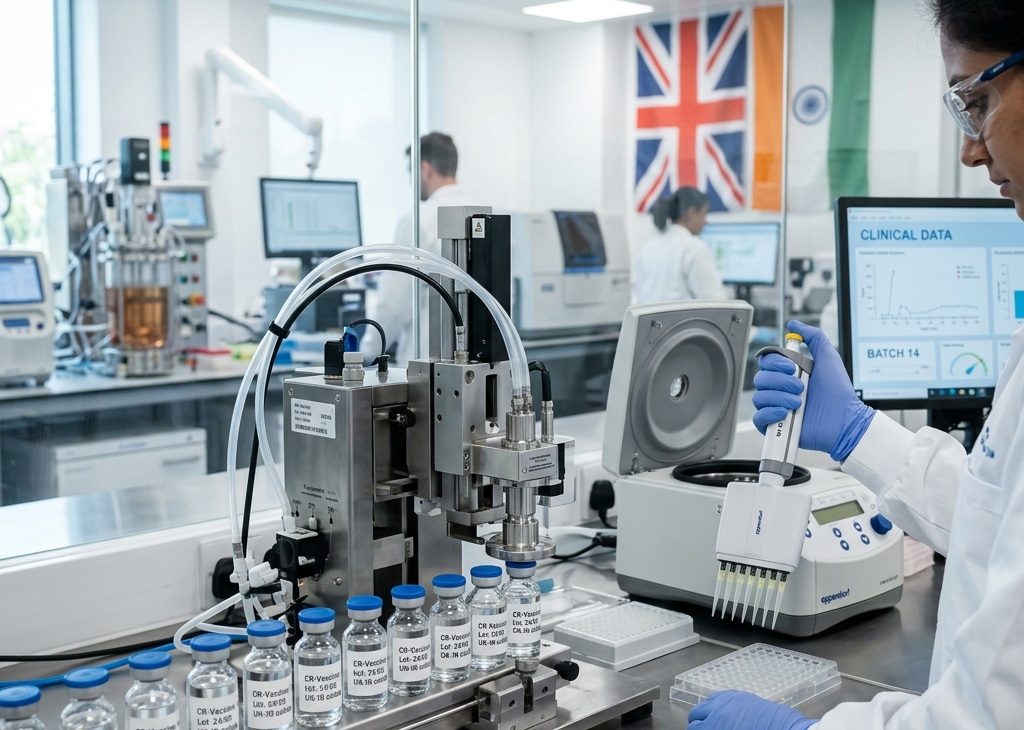

To commercialize a new pharmaceutical product globally, developers must submit detailed applications to regulatory bodies (like the FDA, EMA, and HPRA). To streamline this process, the International Council for Harmonisation (ICH) developed the **Common Technical Document (CTD)** format, establishing a unified dossier structure recognized worldwide.
The 5 Modules of the CTD Structure
The CTD dossier is organized into a pyramid structure of five distinct modules:
- Module 1 (Region Specific): Contains administrative documents and labeling specific to the local region (e.g., FDA forms, regional packaging designs). This module is technically outside the global CTD definition.
- Module 2 (Summaries): Provides high-level summaries and overviews of Modules 3, 4, and 5, authored by qualified scientific experts.
- Module 3 (Quality): Details the chemistry, manufacturing, and control (CMC) parameters of the drug substance and final drug product.
- Module 4 (Nonclinical): Archives the toxicology and pharmacology reports from preclinical animal studies.
- Module 5 (Clinical): The largest module, containing clinical study reports, pharmacokinetic data, and safety profiles from human clinical trials.
The Shift to Electronic CTD (eCTD)
Virtually all modern submissions are compiled as **eCTD**, using XML structures to link files, manage document lifecycle updates, and allow regulators to navigate the massive database of files efficiently.
Detailed Breakdown of the 5 CTD Modules
The Common Technical Document (CTD) is organized into five distinct modules, structured as a pyramid. Module 1 sits at the top and is region-specific, containing administrative documents such as application forms, proposed labeling, and prescribing information tailored to the local regulator (e.g., FDA in the US or EMA in Europe). Because it is region-specific, Module 1 is technically not considered part of the core global CTD, but it is required for any local submission.
Module 2 provides the "Quality Overall Summary," "Nonclinical Overview/Summary," and "Clinical Overview/Summary." This module is critical as it acts as an executive summary of the entire dossier, distilling thousands of pages of research into high-level, cohesive summaries that regulatory reviewers read first to grasp the product's profile.
Module 3 is dedicated to Quality (Chemistry, Manufacturing, and Controls - CMC). It outlines the physical drug substance and drug product characteristics, detailed manufacturing processes, validation data, stability studies, and raw material controls. Module 4 contains Nonclinical Study Reports, covering in vitro and in vivo toxicology, pharmacology, and pharmacokinetic studies. Module 5, at the base of the pyramid, contains the Clinical Study Reports, documenting all human clinical trial protocols, statistical analyses, and patient safety data.
The Shift to eCTD: Challenges and Trends
Today, almost all regulatory submissions are made electronically via the electronic Common Technical Document (eCTD) format. eCTD uses XML backbones to manage document lifecycles, enabling sponsors to submit updates, amendments, and annual reports as sequential lifecycle updates rather than static files. Navigating eCTD validation rules is a core skill for modern regulatory affairs professionals, requiring expertise in metadata tagging, hyperlinking, and submission software platforms.
Frequently Asked Questions
What is the primary benefit of the CTD structure?
The CTD harmonizes drug applications globally, allowing pharmaceutical companies to compile a single core dossier (Modules 2 to 5) that can be submitted to regulators worldwide (FDA, EMA, PMDA) with only minor administrative modifications in Module 1.
What does CMC stand for in Module 3 of the CTD?
CMC stands for Chemistry, Manufacturing, and Controls. It contains all the detailed chemical manufacturing data, quality control specifications, stability profiles, and analytical validation data for both the drug substance and the final drug product.
Why is the clinical summary in Module 2 so critical?
Module 2 provides the regulatory reviewers with the initial technical summaries and rationales for the drug's safety, efficacy, and quality. A poorly written Module 2 can delay the review process if reviewers find inconsistencies between the summaries and the raw study reports in Modules 3, 4, or 5.
Frequently Asked Questions
What are the five modules of the eCTD?
Module 1 contains administrative and prescribing information. Module 2 contains summaries of modules 3 to 5. Module 3 focuses on Quality (chemistry, manufacturing, and controls). Module 4 covers Nonclinical Study Reports, and Module 5 contains Clinical Study Reports.
What is the role of ICH in CTD harmonization?
The International Council for Harmonisation (ICH) developed the CTD to standardize drug registration dossiers across Europe, the US, and Japan, reducing the need to reformat submissions for different agencies.
How has the transition to eCTD improved the review process?
eCTD utilizes XML structures and lifecycles, allowing regulatory reviewers to search document text, track document histories, and review submissions much faster than paper-based dossiers.
Frequently Asked Questions
What are the five modules of the eCTD?
Module 1 contains administrative and prescribing information. Module 2 contains summaries of modules 3 to 5. Module 3 focuses on Quality (chemistry, manufacturing, and controls). Module 4 covers Nonclinical Study Reports, and Module 5 contains Clinical Study Reports.
What is the role of ICH in CTD harmonization?
The International Council for Harmonisation (ICH) developed the CTD to standardize drug registration dossiers across Europe, the US, and Japan, reducing the need to reformat submissions for different agencies.
How has the transition to eCTD improved the review process?
eCTD utilizes XML structures and lifecycles, allowing regulatory reviewers to search document text, track document histories, and review submissions much faster than paper-based dossiers.